
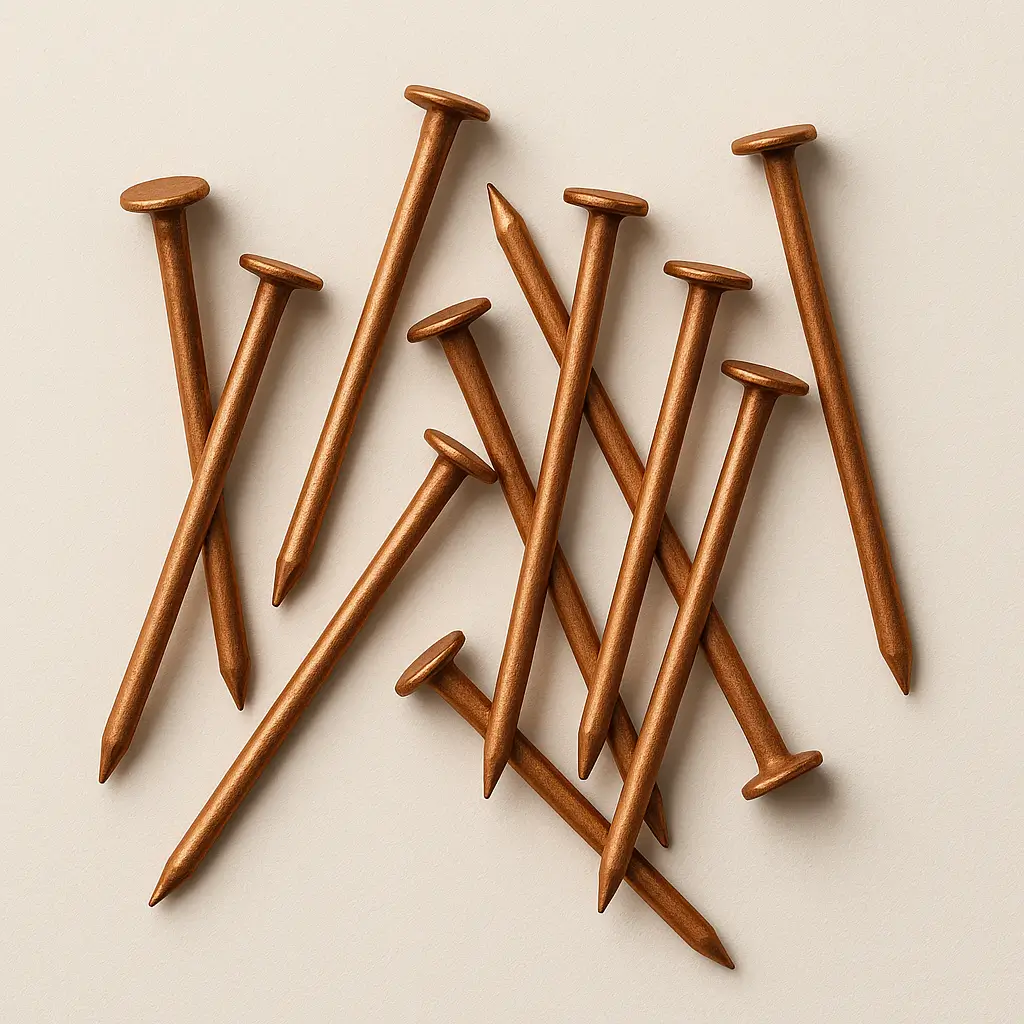
Picking the right nails for your roof can feel like a puzzle, especially with many options in the market. Professional roofers often choose copper nails for roofing shingles because they last longer than other metal fasteners.
These special nails fight off rust and hold shingles tight through harsh weather, making them a smart choice for any roofing project. Your roof stays strong and leak-free with copper nails.
Key Takeaways
- Copper nails last 70-100 years and resist rust better than other metal fasteners. They work best with slate tiles and need four nails per shingle to meet building codes.
- Ring shank copper nails provide 300% more holding power than smooth shank nails. Most architectural shingles require 240-360 nails per square for proper installation, especially in high-wind areas.
- These nails create a natural barrier against moisture and prevent oxidation. Their anti-bacterial properties stop algae growth and other harmful organisms from damaging roof structures.
- Professional roofers recommend one-inch copper nails for typical architectural shingles with 3/8-inch sheathing. Historical buildings from the 1800s still have their original copper nail installations intact.
- Regular roof inspections help track copper nail performance. Experts suggest checking for nail pops every spring and scheduling professional inspections twice yearly.
Properties of Copper Nails
Copper nails stand as the top choice for roofing jobs because they resist rust better than other metals. These nails pack enough strength to hold heavy slate tiles while lasting through decades of harsh weather.
Durability and Strength
Roofing nails made from copper stand strong against harsh weather in Surprise, Arizona. These nails resist rust and corrosion naturally, making them perfect for local roofing projects.
The strength of copper nails keeps shingles firmly attached to roofs through intense desert heat and monsoon storms.
Copper’s natural properties create a reliable fastening system that lasts for decades. The nails maintain their grip even in coastal areas where salt exposure threatens other metal fasteners.
Their durability prevents common roof failures caused by weakened or corroded nails. This strength ensures the whole roofing system stays secure and stable over time.
Natural Resistance to Rust and Corrosion
The strength of copper nails leads perfectly into their most valuable feature: outstanding resistance against rust and corrosion. Copper nails stand strong in harsh weather conditions that often plague Surprise, Arizona, roofs.
These nails create a natural barrier that blocks out moisture and prevents oxidation, making them perfect for long-term roofing projects.
Salt air poses zero threat to copper roofing nails, unlike their steel counterparts. The nails maintain their integrity even in areas with high moisture levels or coastal influences.
Their natural anti-bacterial properties fight off algae growth and other harmful organisms that could damage your roof structure. Most copper nails last the entire lifetime of a roof without needing replacement, saving property owners money on future repairs and maintenance costs.
Advantages of Using Copper Nails for Roofing Shingles
Copper nails stand as the top choice for roofing shingles due to their amazing strength and lasting power. These nails create a perfect match with slate roofs and other premium roofing materials, making them worth every penny for your home’s protection.
Compatibility with Slate and Other Roofing Materials
Copper nails create perfect bonds with slate roofs and other premium roofing materials. These nails grip tightly to slate tiles, keeping them secure through harsh weather conditions.
Ring shank copper nails offer 300% more holding power than smooth shank options, making them ideal for Arizona’s extreme climate.
Roofing contractors prefer copper nails because they work well with many roofing types. The nails stay strong and rust-free while matching the look of copper flashing and architectural details.
Their natural resistance to corrosion means they last as long as the slate tiles themselves, often 50 years or more. Most slate roof installations need four nails per shingle to meet building codes and warranty requirements.
Long Lifespan and Low Maintenance
Roofing experts praise copper nails for their remarkable lifespan of 70 to 100 years. These nails stand strong through harsh Arizona summers and maintain their grip on shingles decade after decade.
Many historical buildings from the 1800s still showcase their original copper nail installations. The natural strength of copper nails creates a lasting bond that keeps roofing materials firmly in place, making them a smart choice for property owners who want lasting results.
Maintenance costs stay low with copper nail installations because these fasteners fight off rust and decay naturally. The protective patina shields the nails from rain, sun, and other weather elements that typically damage standard roofing materials.
Moss and fungi can’t grow on copper surfaces, which means fewer roof repairs over time. Small business owners and homeowners save money on upkeep while enjoying peace of mind about their roof’s condition.
Regular roof inspections help track the performance of copper nails throughout their long service life.
Next, let’s explore what to look for during roof inspections and maintenance checks…
Roof Inspection and Maintenance
Regular roof checks keep your home safe from harsh Arizona weather. Smart maintenance helps you spot issues with copper nails and other roofing parts before they become major problems.
- Check your roof every spring for nail pops caused by warped decking or poorly driven nails. Replace damaged shingles and nails right away.
- Look for loose shingles that might need extra copper nails, especially after strong desert winds. Most architectural shingles need about 240 nails per square for proper attachment.
- Inspect the roof sheathing through your attic for signs of nail penetration or moisture damage. Good copper nails should go through the decking without splitting it.
- Count exposed nail heads on your shingles. High wind areas need about 360 nails per square for better hold.
- Test nail firmness with a roofing hammer. Loose nails need immediate replacement with new copper fasteners.
- Clean debris from valleys and gutters that might trap moisture around nail heads. Copper resists rust but needs clear drainage.
- Schedule professional inspections twice yearly to check nail placement and shingle condition. Experts can spot early signs of nail failure.
- Measure nail length during repairs. One-inch copper nails work best for typical architectural shingles with 3/8-inch sheathing.
- Document all maintenance work, including nail replacements and repairs. Good records help track your roof’s lifespan.
- Replace any smooth-shank nails with ring-shank copper nails during repairs. Ring shanks grip better in high winds.
Conclusion
Copper nails stand as the top choice for quality roofing projects. Smart roofers pick copper nails because they last longer than other options and protect slate tiles better. These nails resist rust and corrosion, making them perfect for Arizona’s harsh weather.
Your roof deserves the best materials, and copper nails deliver superior performance year after year. Copper nails might cost more upfront, but they save money through fewer repairs and longer roof life.
FAQs
1. Why do roofers prefer copper nails over galvanized steel nails?
Copper nails resist rust better than galvanized nails and last longer on roofs. These nails provide excellent holding power for shingles and work well with various roofing materials, including slate and asphalt shingles.
2. What size copper nails should be used for roofing shingles?
The right roofing nail size depends on your shingle type, but most copper nails for roofing are 1.25 to 2 inches long.
3. Can copper nails be used with a nail gun for roof installation?
Yes, copper coil nails work perfectly with nail guns, making roof replacement faster and more efficient.
4. How many copper nails are needed for a new roof?
A typical roof needs about 320 nails per square of shingles. The exact number varies based on your roof size and local building codes.
5. Do copper nails cost more than other roofing nail materials?
Copper nails cost more than aluminum nails or galvanized steel nails, but their longer lifespan and better performance make them worth the investment for secure and long-lasting roofs.
6. Can copper nails be used with all types of roof shingles?
Copper nails work well with most roofing materials, including asphalt shingles and slate. They’re especially good for roofing felt and roof underlayment installation.