

What Your Insurance Covers and Doesn’t Cover for Roof Damage
Living in Surprise, Arizona, means your roof endures relentless sun, intense heat, powerful monsoon winds, and sudden hailstorms. When severe weather strikes and your roof sustains damage, understanding your homeowner’s insurance coverage is crucial. Knowing exactly what your policy pays for — and what falls under your responsibility — can save you time, money, and frustration during an already stressful situation.
This comprehensive guide breaks down everything you need to know about insurance coverage for roof damage. From understanding covered perils, exclusions, the impact of roof age and materials, to navigating the claims process, we equip you with expert insights and actionable advice to protect your home and maximize your insurance benefits.
What you will learn in this article:
- Homeowner’s insurance in Surprise, Arizona, covers roof damage from sudden, accidental events like windstorms, hail, lightning, falling trees, fire, snow, and ice.
- Insurance generally does NOT cover gradual wear and tear, lack of maintenance, aging roofs, poor installation, pre-existing damage, cosmetic damages, mold, flood or earthquake damage, and animal or pest damage.
- Roof leaks are covered only if caused by covered perils (e.g., storm damage); leaks from aging, worn components, or neglect are excluded.
- Roof age and materials affect coverage and premiums: newer roofs (0-10 years) get better coverage; older roofs (20+ years) face more restrictions.
- Roof materials like asphalt shingles, tile, and metal have different durability and insurance considerations; tile and metal roofs often get better insurance terms.
- Replacement Cost Value (RCV) policies pay full replacement costs; Actual Cash Value (ACV) policies pay depreciated amounts—knowing your policy type is crucial.
- Deductibles range from $500 to $2,500 or higher; wind and hail events may have specialized, higher deductibles based on home value.
- Proper documentation (photos, videos, professional inspections) is key to successful claims; save all receipts and damaged materials.
- Avoid mistakes such as delayed filing, discarding damaged materials, accepting first settlement offers, making permanent repairs before inspection, and hiring unlicensed contractors.
- The claim process involves immediate documentation, temporary repairs if safe, professional inspection, prompt reporting, cooperation with adjusters, obtaining multiple estimates, and careful review of offers.
Understanding What Homeowner’s Insurance Covers for Roof Damage
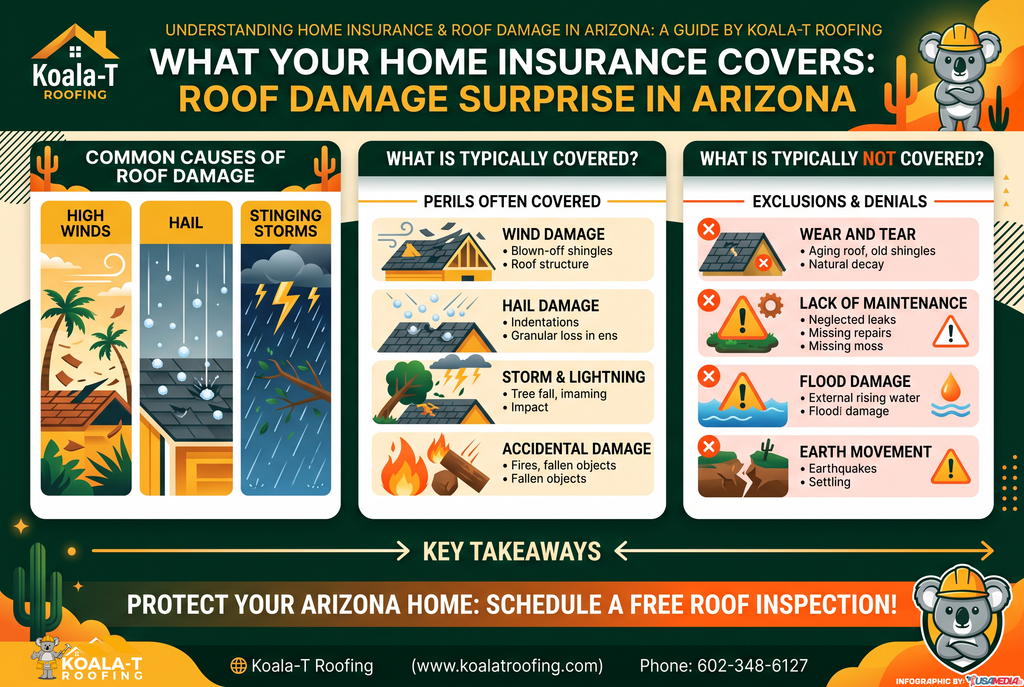
Homeowner’s insurance policies typically cover roof damage caused by sudden, accidental events that are beyond your control. These “covered perils” often include natural disasters and unexpected incidents that directly harm your roof.
Common Covered Roof Damage Events:
- Wind and Windstorms: Damage from strong winds, including gusts during hurricanes or monsoons, can lift, tear, or remove shingles and other roofing materials.
- Hail Damage: Hailstones of any size can dent, bruise, puncture, or crack shingles or roof tiles.
- Lightning Strikes: Fire or structural damage caused directly or indirectly by lightning.
- Falling Trees or Branches: Damage from trees or limbs that fall during storms or heavy snow.
- Fire Damage: Damage resulting from fire, whether ignited by lightning or other sources.
- Snow and Ice Damage: Excessive snow load, ice dam formation, and related collapse or water intrusion damage.
When damage results from these covered events, your insurance policy may pay for repairs or a full roof replacement, depending on the claim’s severity and your coverage limits.
What Homeowner’s Insurance Does NOT Cover
While insurance protects against sudden and accidental damages, it specifically excludes issues arising from gradual wear, neglect, or conditions pre-existing before the policy’s start.
Common Exclusions Explained:
- Wear and Tear: Shingles naturally age, deteriorate, and lose effectiveness over time. Insurance does not cover this gradual process.
- Lack of Maintenance: Failing to address minor issues like small leaks or debris buildup that eventually cause damage is the homeowner’s responsibility.
- Aging Roofs: Roofs past their expected lifespan (usually 15-20 years for asphalt shingles) are often ineligible for full coverage due to increased risk.
- Poor Installation: Damage traced back to faulty workmanship or defective materials during installation is excluded.
- Pre-Existing Damage: Any damage present before the current policy began is not covered.
- Cosmetic Damage: Dents, discoloration, or marks that don’t impair functionality may be denied.
- Mold, Rot, and Long-Term Moisture: These are viewed as maintenance issues unless directly caused by a covered peril.
- Flood and Earthquake Damage: These require separate specialized insurance policies.
- Animal or Pest Damage: Damage from rodents, birds, insects, or nesting animals is considered preventable maintenance.
The overarching rule is insurance covers sudden, accidental damage — not problems resulting from neglect or aging.
Roof Leaks and Insurance: What You Should Know
Leaking roofs are common claims but coverage depends heavily on what caused the leak.
- When Insurance Approves Roof Leak Damage Coverage: If a leak results from storm damage, hail, wind, or a fallen tree—i.e., a covered peril—your policy should cover repair costs.
- When Insurance Denies Roof Leak Damage Coverage: If the leak stems from aging shingles, worn flashing, clogged gutters, or lack of upkeep, insurers will likely reject the claim, classifying it as maintenance neglect.
This key distinction underscores why routine inspections and prompt repairs are essential: a minor, ignored leak can escalate into a large and costly problem that insurance won’t cover.
How Roof Age and Material Impact Your Coverage and Premiums
Insurance companies evaluate roof age and construction materials closely since these factors affect risk profiles.
Roof Age Considerations:
- New Roofs (0-10 years): Generally enjoy full coverage with fewer claim hurdles.
- Mid-Age Roofs (10-20 years): Coverage still available but often under greater scrutiny. Insurers may impose coverage limits or higher premiums.
- Older Roofs (20+ years): Insurers might require detailed inspection, impose lower coverage limits, exclude perils like wind or hail, or refuse renewal until replacement.
Investing in a new roof not only protects your home better but often lowers insurance premiums by 5% to 35%.
Looking for a local, reliable and trustworthy roofer for roof repair, roof replacement, new roof installation or roof maintenance? Get a free roof inspection and call or text us at 602-348-6127 or schedule appointment online.Roof Material Types:
- Asphalt Shingles: Most common in Arizona, these last 15-20 years but are vulnerable to wind and hail. Replacement is affordable, and coverage is typically standard.
- Tile Roofs (Concrete or Clay): Extremely durable (40+ years), fire-resistant, and effective against heat and high winds. Tiles may crack individually but are easily repairable. Insurers often favor tile roofs and may offer premium discounts.
- Metal Roofs: Known for impact resistance and longevity, metal roofs might be treated by insurers as “cosmetic only” for dent damage but benefit from excellent wind resistance.
In Arizona’s climate, durable materials like tile and metal roofs often yield better insurance terms and savings.
Replacement Cost Value (RCV) vs. Actual Cash Value (ACV) Policies: What’s the Difference?
One of the most critical considerations in roof insurance is whether your policy offers Replacement Cost Value or Actual Cash Value coverage.
| Policy Type | Description | Example |
|---|---|---|
| Replacement Cost Value (RCV) | Your insurer pays the full cost to replace the roof with a similar new one, minus your deductible. Ideal for homeowners seeking maximum financial protection. | A $15,000 roof replacement after hail damage would be fully covered under RCV (less the deductible). |
| Actual Cash Value (ACV) | The insurer deducts depreciation for roof age and wear before paying. This often results in much lower payouts. | The same $15,000 roof may only yield $10,500 when depreciated 30%. |
Confirm your coverage type immediately because it can mean tens of thousands of dollars in claim payout differences.
Managing Deductibles: What You Need to Know
Your deductible is the out-of-pocket amount before insurance kicks in, significantly affecting your claim payout.
- Standard Deductibles: Usually range from $500 to $2,500.
- Higher Deductibles: Some homeowners opt for $5,000+ to reduce premiums.
- Specialized Event Deductibles: In Arizona, windstorm and hail damage may require separate, higher deductibles, sometimes calculated as a percentage of your home’s insured value (e.g., 5-10%).
If the repair cost falls below your deductible, the insurance will not pay anything. This highlights the importance of accurately estimating damage and knowing your deductible thresholds before filing.
Recognizing and Documenting Storm Damage to Strengthen Claims
Proper documentation dramatically increases your chance of a successful roof damage claim.
Signs to Look For After Severe Weather:
- Missing or lifted shingles blown off by wind.
- Dented, cracked, or bruised shingles from hail.
- Broken or fractured roof tiles.
- Granule loss on asphalt shingles, indicating hail or impact damage.
- Broken tree limbs on or near the roof.
- Water stains or leaks visible in attic ceilings.
- Sagging or warped roof sections hinting at structural issues.
- Damaged or detached flashing around chimneys and vents.
Best Documentation Practices:
- Take immediate, detailed photos and videos—both wide and close-up shots.
- Label files with date and time.
- Obtain a professional roof inspection report for authoritative verification.
- Keep debris and damaged materials for insurer examination.
- Save all repair or temporary fix receipts.
Starting with a free roof inspection from a trusted local roofer, such as Koala-T Roofing in Surprise, AZ, dramatically improves your documentation quality and claim legitimacy.
How Insurance Companies May Deny or Reduce Roof Damage Claims
Understanding common denial tactics equips you to respond effectively:
- Pre-Existing Damage: Insurers claim damage was present before the event. Counter this with dated inspection reports showing sudden damage.
- Wear and Tear: They argue damage is due to aging, not an insured peril. Provide maintenance records and evidence of good roof condition pre-event.
- Cosmetic Damage Only: Insurers deny claims citing functional integrity. Present professional assessments explaining structural impact.
- Lack of Maintenance: Claims of neglect can be contested by showing timely upkeep.
- Deductible Overages: Small damages might be combined into a single substantial claim to surpass the deductible.
- Policy Exclusions: Know your policy front to back; if unfair exclusions arise, don’t hesitate to file complaints or seek legal advice.
Critical Homeowner Mistakes That Jeopardize Claims
Avoid these pitfalls to protect your claim and financial return:
- Waiting too long to file; always meet insurer deadlines.
- Discarding damaged materials before documenting them.
- Accepting the first settlement without review or additional estimates.
- Relying on verbal contractor estimates; get everything in writing.
- Ignoring small leaks, which can evolve into denied claims.
- Making permanent repairs before adjuster inspection.
- Hiring unlicensed or uninsured contractors.
- Neglecting to thoroughly read and understand your insurance policy.
Real-World Insurance Claim Examples
- Successful Claim: A Florida homeowner documented storm damage from a fallen tree with before-and-after photos, leading to full repair payment.
- Denied Hail Claim: A Texas homeowner faced lowball offers because insurers labeled damage “cosmetic.” They resolved the dispute through multiple contractor bids and advocates.
- Lightning Strike Dispute: A Colorado family’s claim was initially underpaid but after a year-long effort and professional appraisals, they secured a fair settlement.
- Winter Damage Denial: In New York, a gradual leak from aging roof was denied even though snow collapsed the roof, emphasizing the importance of demonstrating sudden vs. maintenance-related damage.
Navigating the Roof Damage Insurance Claim Process: Step-by-Step
- Document Damage Immediately: Photos, videos, interior and exterior evidence, date/time stamps.
- Make Temporary Repairs if Safe: Use tarps, photograph those repairs, save receipts.
- Schedule a Free Professional Roof Inspection: Obtain detailed reports, cause analysis, and repair estimates.
- Contact Your Insurance Provider: Report damage promptly without approving permanent repairs.
- Meet the Insurance Adjuster: Provide all documentation; question exclusions and get written assessments.
- Get Multiple Contractor Estimates: Obtain 2-3 detailed estimates to compare against insurer’s offer.
- Review the Settlement Offer Thoroughly: Ensure correct application of RCV or ACV and deductible calculations.
- Select a Reputable, Licensed Roofer and Authorize Repairs: Verify insurance and warranties before work begins.
Why a Professional Roofer is Your Best First Step
Avoid filing your claim without expert input. A professional roofer:
- Identifies hidden damage and confirms cause.
- Provides insurance-ready documentation that holds greater weight.
- Offers accurate repair and replacement cost estimates.
- Strengthens negotiations and protects you from storm-chasing scams.
- Helps you make informed decisions between repair and replacement.
Locally trusted companies like Koala-T Roofing in Surprise, AZ, specialize in desert climate challenges and insurance claims, acting as your advocate from inspection through project completion.
Empower Yourself to Protect Your Roof and Your Investment
Roof damage insurance claims can be complex and stressful, especially when unexpected weather hits hard. By understanding what your homeowner’s insurance covers, avoiding common claim mistakes, properly documenting damage, and engaging professional roofers early, you maximize your chance of a successful claim and protect your home’s long-term value.
Remember: insurance covers sudden, accidental damage—not neglect or normal aging. Staying proactive with roof maintenance and inspections, coupled with smart claim strategies, can save you thousands in unexpected costs.
Invest smartly, document thoroughly, and lean on local, trusted roofing experts to navigate the process confidently. Your roof is your home’s first line of defense—treat it with the care and attention it deserves.
Looking for a local, reliable and trustworthy roofer for roof repair, roof replacement, new roof installation or roof maintenance? Get a free roof inspection and call or text us at 602-348-6127 or schedule appointment online.