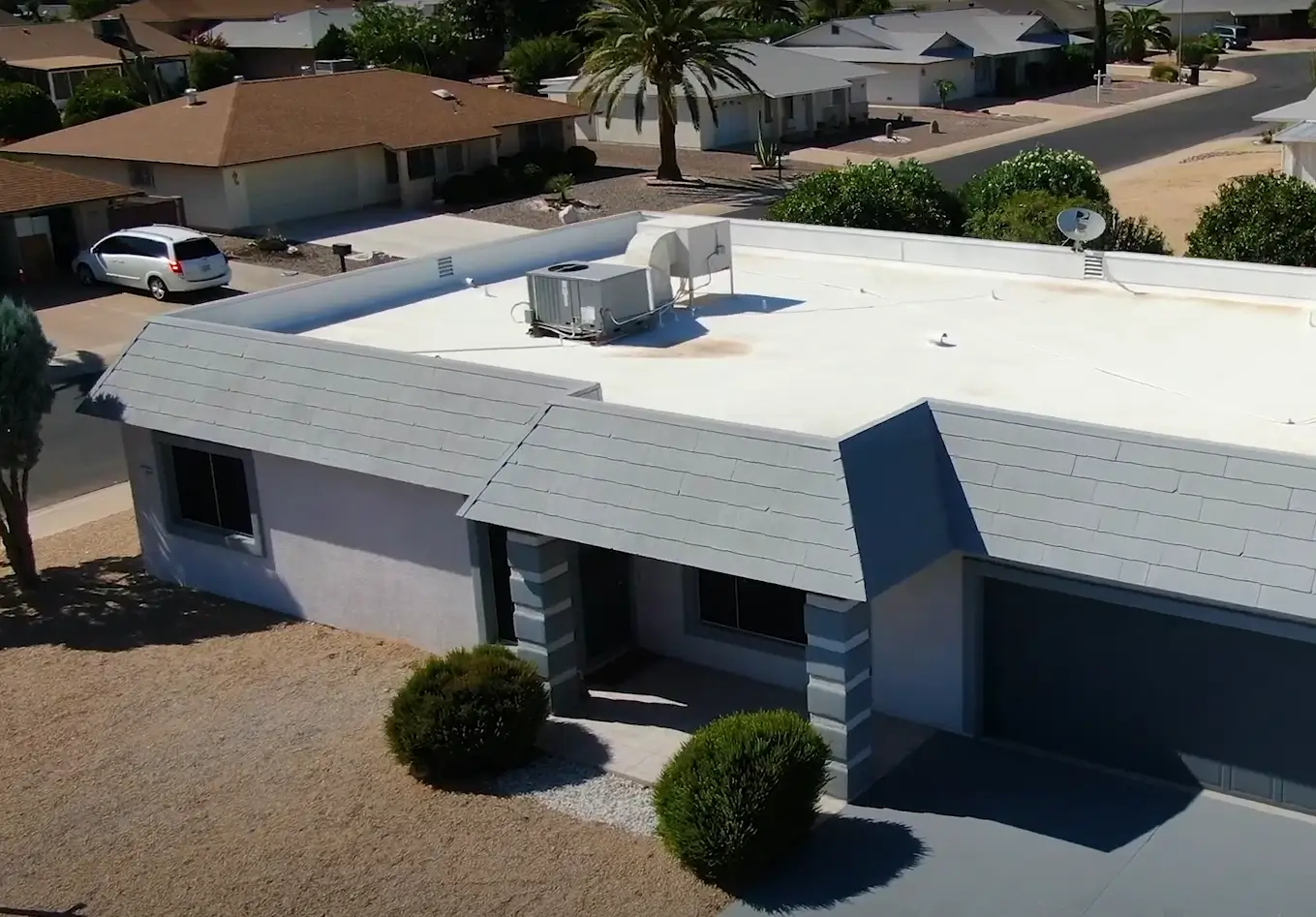
Many homeowners struggle with choosing between flat and pitched roofs for their properties. Flat roofs cost 20% less to build than sloped roofs and need fewer materials during installation.
This guide breaks down the flat roof pros and cons to help you make a smart choice for your home or business. Get ready to learn if a flat roof matches your needs.
Key Takeaways
- Flat roofs cost 20% less than pitched roofs and take less time to build. They last 15-20 years with proper care, while pitched roofs can last up to 50 years.
- The level surface creates extra space for rooftop gardens, solar panels, and HVAC systems. Most flat roofs use simple materials like modified bitumen or single-ply membranes.
- Poor drainage causes major problems for flat roofs, especially during heavy rains. Regular maintenance helps prevent water pooling and extends roof life. Flat roofs need a minimum slope of 1:80 for proper drainage.
- Weather damage from high winds, hail, and extreme heat affects flat roofs more than pitched ones. Quick repairs and regular checks help catch problems early. Local contractors understand Surprise, Arizona’s weather patterns best.
- Professional installation matters most for flat roof success. Choose roofers with five or more years of experience and proper licenses. Always get three quotes and check references before hiring.
Advantages of Flat Roofs
Flat roofs create valuable space for your home or business needs. Modern flat roofs save money through simple designs and quick installation times.
Cost-effective construction
Building a flat roof costs less money than sloped roofs. Materials and labor expenses stay low because roofers need fewer supplies to cover the area. Most flat roofs use simple materials like modified bitumen or single-ply membranes.
These budget-friendly options still provide solid protection that lasts 12 to 40 years with proper care.
Roofing crews work faster on level surfaces, which cuts down on labor hours and total project costs. The basic design needs less structural support than pitched roofs. This means builders can use fewer materials during construction.
Many business owners in Surprise choose flat roofs to save money while getting reliable coverage for their buildings.
Additional usable space
Flat roofs create extra living space right above your home or business. Many property owners in Surprise turn their flat roofs into stunning rooftop gardens or relaxing deck areas.
The open layout makes it simple to add outdoor furniture, plants, and even small pools for those hot Arizona days. Your flat roof can serve as a perfect spot for morning coffee or evening gatherings under the stars.
The flat surface offers great spots for solar panels and HVAC systems without taking up ground space. Most flat roofs can hold gardens, mechanical equipment, and outdoor living areas at the same time.
Next, we’ll explore why flat roofs make installation and maintenance tasks easier for property owners.
Easy installation and maintenance
Installing a flat roof takes less time than sloped roofs. Professional roofing contractors can complete most installations within a few days. The simple design needs fewer materials and labor hours, which saves money on the total project cost.
Maintenance tasks remain straightforward on flat roofs. Owners can walk safely on the surface to clean debris or check for damage. Regular upkeep extends the life of roofing materials through quick repairs and seasonal inspections.
The next section explores how drainage issues affect flat roof performance.
Ideal for solar panels and HVAC systems
Flat roofs serve as perfect spots for solar panels and HVAC units in Surprise’s sunny climate. These roofs offer clear, open spaces that maximize sun exposure for solar panels, leading to better energy production.
The level surface makes it simple to mount and maintain HVAC equipment without taking up valuable ground space.
Modern flat roofs handle the weight of solar panels and air conditioning systems with ease. The sturdy roof deck supports these installations while keeping them hidden from street view.
Many business owners in Arizona choose flat roofs because they create more room for essential building systems. The direct sunlight access helps solar panels work at their peak efficiency throughout the year.
Disadvantages of Flat Roofs
Flat roofs bring unique challenges that need your attention, from water pooling after heavy rains to faster wear and tear in harsh Arizona sun – read on to learn the key issues you’ll want to watch for.
Drainage challenges
Poor drainage ranks as a major issue for property owners with flat roofs in Surprise, Arizona. Most flat roofs need a minimum slope of 1:80 to move rainwater away properly. Standing water creates heavy pressure on roofing materials and leads to leaks over time.
The problem gets worse during monsoon season, as water pools in low spots and causes structural damage to the roof membrane.
Proper maintenance helps prevent drainage problems on flat roofs. Regular checks of gutters, drains, and scuppers keep water flowing freely off the roof surface. The slight 10-15 degree pitch built into most flat roof designs aids water removal, but clogs still happen.
Smart property owners clear debris monthly and fix drainage issues fast to protect their roofing investment. Quick repairs to any damaged areas stop water from seeping through the roofing material.
Shorter lifespan compared to pitched roofs
Flat roofs last between 15 to 20 years, while pitched roofs can serve you much longer. Traditional pitched roofs with metal materials stay strong for up to 50 years. Modern flat roof materials like EPDM rubber offer better durability than old-style felt roofs, which only last 10 to 15 years.
Regular maintenance plays a big role in how long your flat roof will last in Surprise’s harsh desert climate. Flat roofs need more frequent checks and repairs than sloped ones. The direct sun exposure and intense heat can speed up wear and tear on roofing materials.
Your choice of roofing material and proper installation will affect your roof’s lifespan.
Susceptibility to weather-related damage
Weather poses risks to roofs in Surprise, Arizona. High winds can lift roofing materials, while hail storms might crack or dent the surface. Ice dams form during cold weather as water pools and freezes near the roof edges.
These issues create weak spots that lead to leaks and structural damage over time.
Regular roof checks help catch problems early. A well-maintained roof system resists damage from harsh weather conditions. Proper drainage systems prevent water buildup after storms.
Quality roofing materials paired with expert installation create strong protection against weather threats. Modern membrane roofing offers better defense against UV rays and extreme temperatures common in Arizona’s climate.
Common Roofing Problems and How to Address Them
Flat roofs need regular checks to stay in good shape. Your roof can face several issues that need quick fixes to avoid bigger problems.
- Leaks often pop up near joints and seams, requiring prompt patching with proper roofing materials to stop water damage
- Standing water lasting more than 72 hours causes sagging and needs proper drainage fixes through slope adjustments
- Membrane splits create leak risks and call for professional repairs using matching roofing materials
- Blistering happens from trapped air or moisture, needing careful removal and patching of damaged spots
- Cracking shows up from sun damage or age, demanding targeted repairs with flexible sealants
- Poor installation leads to loose seams that need professional resealing with quality adhesives
- Flashing failures around vents cause leaks, requiring new metal flashing installation
- Age-related wear breaks down roofing materials, making regular inspections vital
- UV damage weakens roofing materials, calling for protective coating applications
- Ponding water attracts plant growth, requiring removal and drainage improvements
Next, we’ll explore how to pick the right roofer for your flat roof project.
How to Choose the Right Roofer for Your Flat Roof
Finding a skilled roofing expert stands as a crucial step for your roofing project. Your choice will affect both the quality and longevity of your roof system.
- Ask for proof of insurance before starting any roofing projects to protect your property from accidents or damage.
- Check the contractor’s license status through Arizona’s Registrar of Contractors database.
- Request at least three references from past clients who had similar roofing solutions installed.
- Look for roofing companies with five or more years of experience in installing commercial and industrial roofing.
- Read online reviews and ratings from trusted platforms to gauge customer satisfaction levels.
- Get detailed written estimates that include material costs, labor, and a timeline for completion.
- Make sure the roofing company offers solid warranties on both workmanship and materials.
- Pick a local contractor who understands Surprise, Arizona’s weather patterns and building codes.
- Compare quotes from multiple roofing experts before making your final choice.
- Ask about their experience with specific roofing materials like TPO roof or modified bitumen roofing.
- Verify if they have proper safety training and equipment for working on commercial buildings.
- Request proof of their expertise in handling HVAC systems and solar panel installations.
Conclusion
Flat roofs bring clear benefits and drawbacks for property owners. Your choice depends on your local climate, budget, and building needs. Smart planning and regular care make flat roofs work well in many places.
A skilled roofer can help you make the right call for your property. Your roof choice shapes your building’s future, so weigh each option with care.
FAQs
1. What are the main advantages of a flat roof?
Flat roofs offer lower installation costs and create usable space on top for things like solar panels or roof gardens. They work well with modern home design and make heating and ventilation systems easier to install.
2. What problems do flat roofs have?
Flat roofs have a tendency to collect pooling water and snow. They often need more maintenance than pitched roofs and may require frequent waterproofing checks.
3. How long do flat roofing materials last?
Most flat roofing materials, like rubber roofing or rolled rubber, last 20-25 years with proper care and maintenance.
4. Are flat roofs good for all climates?
Flat roofs work best in dry climates. Rain gutters and proper drainage systems must be installed to prevent water damage in wet areas.
5. What types of flat roofing systems are available?
Popular flat roofing options include natural rubber, polyurethane, and ethylene propylene diene materials. These materials offer different levels of durability and weather resistance.
6. How much maintenance do flat roofs require?
Flat roofs need regular checks for punctures, pooling water, and damage to the top layer. Professional inspections twice yearly help catch problems early and extend the roof’s life.