
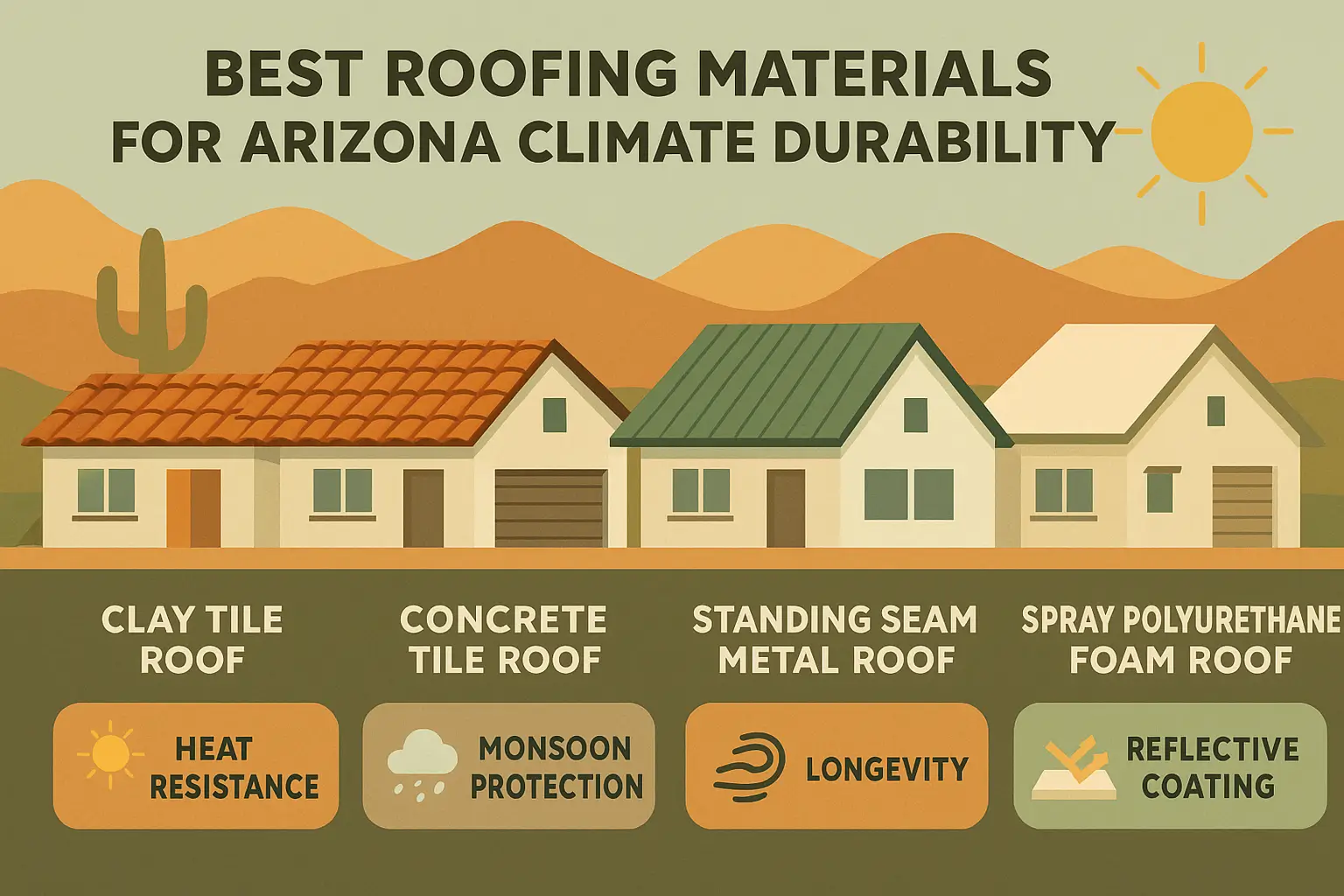
Living in Arizona means your roof takes a beating from intense sun, heat, and storms. Metal roofs last 40-60 years in hot climates, making them a smart choice for desert homes. The best roofing materials for climate durability must handle extreme weather while keeping your energy bills low.
Your perfect roof awaits in this guide to Arizona’s top roofing choices.
Key Takeaways
- Metal roofs last 40-60 years in Arizona’s climate and can withstand winds up to 120 mph, making them ideal for desert storms.
- Clay tiles last over 50 years, while concrete tiles offer a cheaper option per square foot.
- Slate roofing lasts over 100 years but needs special support since it weighs more than 1,000 pounds per square foot.
- Metal roofs with proper insulation can cut energy bills by 40% through better heat reflection and temperature control.
- Asphalt shingles remain the most common choice in Arizona, lasting 20-30 years with regular maintenance and offering good value for budget-conscious homeowners.
Factors to Consider When Choosing Roofing Materials
The right roofing material shields your home from Arizona’s extreme weather patterns and cuts your energy costs. Your roof needs to match your local climate conditions, energy efficiency goals, and maintenance budget.
Local climate conditions
Arizona’s harsh climate demands special attention to roofing choices. Intense summer heat reaches beyond 110°F, while sudden monsoon storms bring heavy rain and strong winds. These extreme weather patterns create unique challenges for roofs in Surprise and nearby areas.
Local weather puts constant stress on roofing materials through thermal shock and moisture exposure. Roof materials must handle rapid temperature changes, intense UV rays, and seasonal monsoons without cracking or warping.
Metal roofing, clay tiles, and foam systems stand up well to these tough desert conditions, offering both durability and energy savings for property owners.
Energy efficiency and insulation
Local weather patterns create a direct link to your roof’s energy performance. Modern roofing materials must work hard to keep indoor spaces cool and comfortable. The right roofing choice can cut cooling costs through better heat reflection and insulation.
Clay and terracotta tiles stand out as top performers for energy savings in hot climates. These materials naturally reflect sunlight and reduce heat transfer into buildings.
Smart insulation paired with reflective roofing creates a strong defense against extreme temperatures. Your HVAC system won’t need to work as hard with proper roof insulation in place.
The combination of reflective surfaces and quality insulation helps maintain steady indoor temperatures. This setup leads to lower energy bills and more comfortable spaces year-round.
Many homeowners notice a big difference in their cooling costs after installing energy-efficient roofing materials.
Durability and maintenance requirements
Roofing materials must stand up to Arizona’s harsh weather conditions. Clay tiles offer superior durability with a lifespan of over 50 years, making them a smart choice for Surprise homeowners.
Metal roofs match this longevity and need minimal upkeep, saving money on repairs through the decades. These materials resist fire damage and handle extreme heat without cracking or warping.
Regular maintenance keeps roofs in top shape for their full lifespan. Concrete tiles deliver solid protection at a lower price than clay options, while lasting decades with proper care.
Asphalt shingles need more frequent replacement, typically lasting 15 to 20 years in the desert climate. The right material choice cuts down on repair costs and extends the time between major roof work.
Best Roofing Materials for Hot Climates
The scorching Arizona sun demands tough roofing materials that can handle extreme heat and intense UV rays. Metal roofs, clay tiles, and slate stand as top picks for desert homes, each bringing unique benefits to protect your property from the brutal summer temperatures.
Metal Roofing
Metal roofs stand as a top choice for Arizona homes and businesses. These sturdy materials last over 50 years with proper care, making them a smart investment for property owners. Standing seam and screw-down panels give owners flexible options that match their needs and budget.
Aluminum, steel, and galvalume metals excel in hot desert conditions. These materials reflect sunlight and heat away from buildings, cutting cooling costs during summer months. Metal roofs resist damage from harsh UV rays, dust storms, and sudden rainfall that often hit Surprise and nearby cities.
Their durability against extreme weather makes them perfect for Arizona’s challenging climate.
Clay and Concrete Tiles
Clay and concrete tiles stand as top choices for Arizona homes. Clay tiles last over 50 years in harsh desert conditions. These tiles create a beautiful Southwest style while keeping homes cool through natural air circulation.
Concrete tiles offer a budget-friendly option. The simple mix of sand, cement, and water creates strong tiles that handle extreme heat.
Both materials excel at reflecting sunlight and reducing cooling costs in hot climates. The tiles’ curved shape allows air to flow naturally, which helps lower indoor temperatures.
Their thick structure provides great insulation against summer heat and winter cold. The natural colors blend perfectly with desert landscapes while protecting homes from UV damage.
Slate roofing presents another excellent option for homeowners seeking premium protection from Arizona’s intense weather patterns.
Slate Roofing
Slate roofing stands as a premium choice for Arizona homes and businesses. Natural stone slates create a stunning roof that lasts more than 100 years with proper installation. The material resists harsh desert sun, extreme heat waves, and wild temperature swings common in Surprise and nearby areas.
The hefty weight needs extra roof reinforcement, but the durability makes slate a one-time investment that boosts property value. The natural stone reflects sunlight and helps cut cooling costs during hot Arizona summers.
Best Roofing Materials for Cold Climates
Cold climates need special roofing materials to handle snow, ice, and freezing temperatures – metal roofing, asphalt shingles, and composite materials lead the pack for their strength and insulation properties, read on to learn more about each option.
Asphalt Shingles
Asphalt shingles stand as America’s most popular roofing choice, especially in Arizona’s varied climate. These budget-friendly materials last between 20 to 30 years with proper care and maintenance.
Most U.S. homes feature these shingles due to their easy installation process and reliable performance in both hot and cold weather conditions.
Professional roofing contractors can install asphalt shingles quickly, making them perfect for urgent roof repairs or replacements. The materials offer good value for homeowners who need durable protection without breaking the bank.
Metal roofing presents another excellent option for homes in hot climates, offering enhanced durability and energy efficiency.
Composite Roofing
Composite roofing stands as a top choice for Arizona property owners who need reliable protection against harsh desert conditions. Modern composite tiles match the beauty of natural materials like cedar shake and old world slate, while offering superior durability.
These synthetic materials earn Class A and C fire ratings plus a Class 4 impact rating, making them perfect for extreme weather protection. The lightweight nature of composite roofing helps reduce stress on building structures without sacrificing strength.
Property owners love composite roofing because it needs very little upkeep compared to traditional slate or clay options. The materials resist water damage and stay strong through heavy rains, which matters during Arizona’s monsoon season.
Composite tiles also boost energy efficiency by reflecting heat away from buildings, leading to lower cooling costs in summer months. Metal roofing brings another set of benefits worth exploring for desert climates.
Metal Roofing with Insulation
Metal roofs with proper insulation create a powerful shield against Arizona’s harsh weather. These roofs stand strong against winds up to 120 miles per hour, making them perfect for desert storms.
The metal surface reflects sunlight while the insulation keeps indoor temperatures stable, leading to 40% savings on energy bills.
Smart homeowners pick metal roofs because they last three times longer than standard materials. The tough surface resists large hailstones up to 2.5 inches, protecting homes from storm damage.
Modern insulation layers work with the metal to block heat transfer, keeping homes cool in summer and warm in winter. This combo makes metal roofing a practical choice for Surprise residents who want long-term value and comfort.
Energy Efficient Roofing Materials for Residential Use
Energy-smart roofing materials make a huge difference in Arizona’s scorching climate. Clay tiles stand out as a top choice, lasting more than 50 years while keeping homes naturally cool through excellent insulation.
Reflective roofing options cut cooling costs big time, making them perfect for Surprise’s hot weather. These materials bounce the sun’s rays away from your house instead of soaking up heat.
Modern roofing technology offers amazing options for local homeowners who want to save on energy bills. Metal roofs reflect sunlight really well and can last over five decades with little upkeep.
Concrete tiles give similar cooling benefits to clay but cost less money upfront. The right roof choice helps your air conditioning work less hard, which means lower monthly bills and more comfort inside your home.
Roof Replacement Options and Considerations
Roof replacement needs careful planning to protect your home from Arizona’s harsh weather. Local homeowners must pick materials that match their budget and style while standing up to extreme desert conditions.
- Metal roofing offers great value with a 50-year lifespan and low upkeep costs, perfect for Surprise’s hot climate.
- Clay tiles create a classic Southwest look and last up to 100 years with proper installation and maintenance.
- Professional roof inspections help spot damage early and save money on future repairs.
- Local building codes require specific materials and installation methods for safety and durability.
- Proper attic ventilation extends roof life and cuts cooling costs in summer months.
- Light-colored roofing materials reflect sunlight and reduce air conditioning expenses.
- Quality underlayment provides extra protection against rare but heavy desert rains.
- Removal of old roofing materials adds to project costs but ensures better installation results.
- Warranty coverage varies between materials and installers, ranging from 20 to 50 years.
- Storm damage insurance claims need proper documentation from certified roofers.
- Synthetic roofing products resist UV damage and cost less than natural materials.
- Fall and winter months offer ideal conditions for roof replacement in Arizona.
- Proper disposal of old roofing materials follows strict local recycling guidelines.
- Energy-efficient options qualify for tax credits and utility company rebates.
- Material delivery timing affects project completion and should match installation schedules.
Conclusion
Your choice of roofing material shapes your home’s durability in Arizona’s harsh climate. Metal roofs, clay tiles, and slate stand as top picks for their strength against intense sun and sudden storms.
Smart homeowners pick materials that match both their budget and local weather patterns. These materials protect homes while cutting energy costs through better insulation and heat reflection.
FAQs
1. What roofing materials work best for Arizona’s extreme weather conditions?
Tile roofs and synthetic roofing materials offer the best durability for hot climates. These materials withstand intense sun, resist weathering, and help with efficient energy use through their reflective surfaces.
2. How does roof color affect home cooling in Arizona?
Light-colored roofing materials reflect more heat and lower cooling costs. The right roof color helps your home stay cooler during humid summers.
3. Which roofing system provides the best protection against wildfires?
Metal roofing and composite roof tiles rate highest for fireproofing in Arizona. These high-quality roofing options resist wear and tear while protecting your home from fire risks.
4. Are there environmentally friendly roofing options for Arizona homes?
Many premium roofing materials now include recycled materials that offer durability and energy efficiency. These building materials help reduce environmental impact while maintaining top performance in hot climates.
5. What type of roof maintenance is needed for Arizona weather?
Regular inspections of your roof structure ensure proper waterproofing and prevent corrosion. The intense sun and heat require yearly checks of your roofing system.
6. How long do different roofing materials last in Arizona?
Metal roofs can last 50 years, while roof tiles typically last 30 years in hotter climates. Common roofing materials like asphalt shingles may need replacement after 15-20 years due to sun exposure.